The Government Warm Homes Plan: What It Means for Electricians and Domestic Installers
The UK government’s Warm Homes Plan is designed to address one of the most pressing issues facing households today: fuel poverty. Rising energy costs and inefficient homes leave millions struggling to heat their properties. The Warm Homes Plan aims to improve energy efficiency, reduce carbon emissions, and ensure households can afford to stay warm.
Why the Warm Homes Plan Has Come Into Play
Several factors have driven the creation of the plan:
Fuel Poverty
A significant number of UK households spend a disproportionate amount of income on energy.
Poorly insulated homes, inefficient heating systems, and reliance on fossil fuels exacerbate the issue.
Carbon Reduction Targets
The UK government has set ambitious carbon reduction goals. Upgrading domestic heating and energy systems is critical to meet these targets.
Technological Change
Advances in low-carbon technologies, including heat pumps, energy storage, and renewable generation, provide practical ways to make homes warmer and cleaner.
Economic Stimulus for Home Upgrades
Investments in energy efficiency create opportunities for skilled installers and electricians to participate in a growing market.
By addressing energy efficiency and carbon reduction simultaneously, the plan is both a social policy and a market driver.
“Our current dependence on volatile and expensive fossil
fuels is bad for energy bills, energy security, fuel poverty
and climate change.”
Opportunities for Electricians and Installers
The Warm Homes Plan opens new areas of work for domestic installers:
Low-carbon heating installations (heat pumps, modern boilers)
Renewable energy systems (photovoltaic solar, battery storage)
Electric vehicle charging infrastructure for homes and small businesses
For electricians, these represent areas to diversify services and meet rising demand for low-carbon and energy-efficient technologies.
“ By 2030 we will:– Triple the number of homes with solar today by
deploying panels on the rooftops of up to 3 million
more homes.”
Potential Challenges and Pitfalls
While opportunities exist, installers need to be aware of challenges and requirements:
MCS Accreditation
Certain installations, particularly renewable energy systems, require Microgeneration Certification Scheme (MCS) accreditation.
Accreditation ensures quality, safety, and eligibility for government incentives.
Formal Qualifications and Training Costs
Technicians must complete accredited courses to meet standards.
Training costs, including courses for solar PV, battery systems, and EV chargers, can be significant but are necessary to legally and safely carry out work.
Regulatory Compliance
Installers must adhere to safety and installation standards, including wiring regulations, building regulations, and product-specific requirements.
Market Competition and Awareness
As the plan rolls out, more electricians may enter these markets. Differentiation through proper qualifications, experience, and quality work will be key.
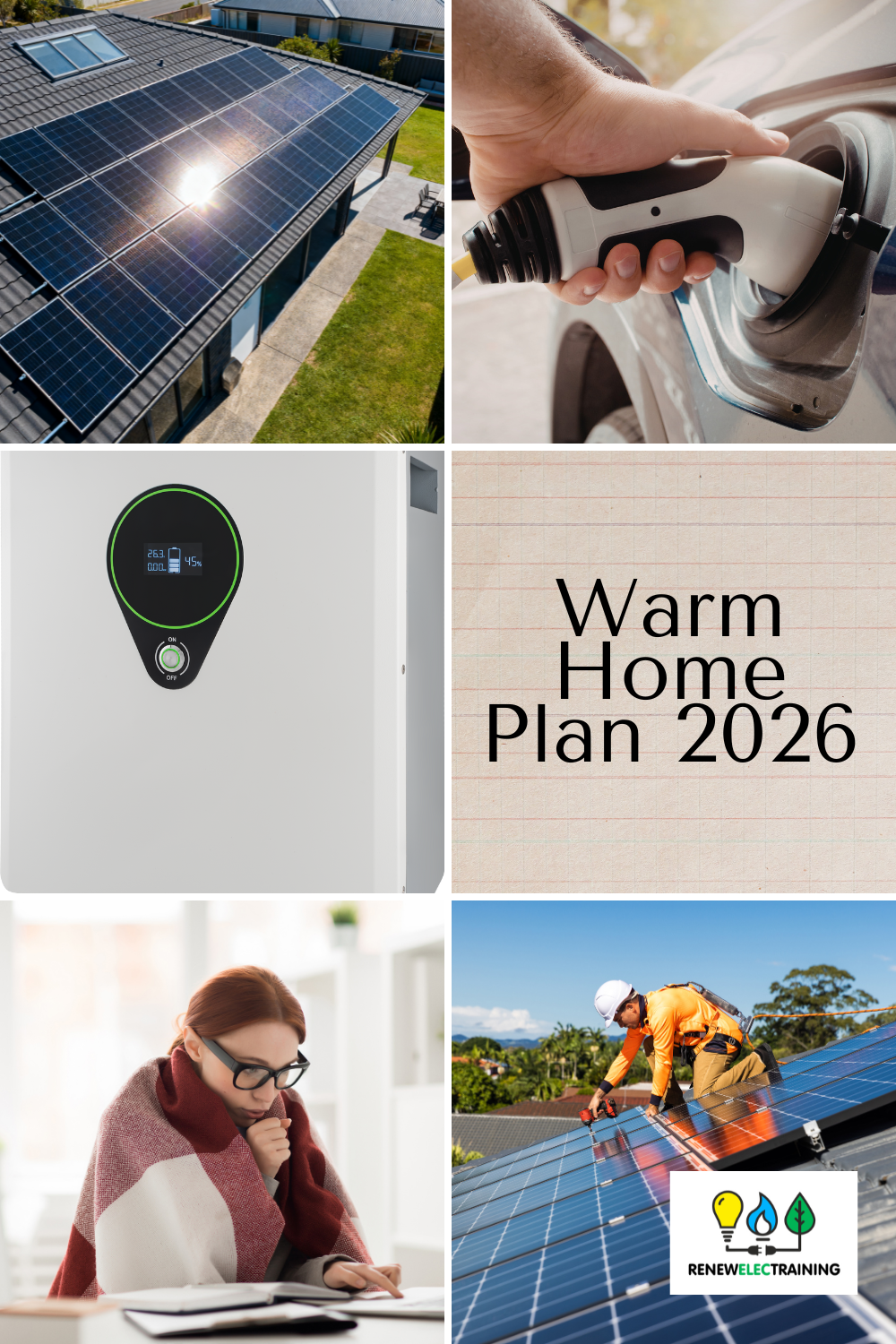
Will the UK governments January 2026 Warm Homes Plan be achievable for electricians and installers of renewable green technologies?
Preparing for the Future
Electricians and domestic installers can take steps now to position themselves effectively:
Stay informed about government schemes, energy efficiency standards, and incentives.
Plan training around MCS-accredited courses and recognized qualifications.
Evaluate the costs and benefits of upskilling versus potential income from new services.
Consider specializing in low-carbon technologies to stand out in a growing market.
This hub can later link to upcoming training for photovoltaic (solar) installation, energy storage systems, and EV charging equipment, providing a pathway from knowledge to qualification.
Final Thoughts
The Warm Homes Plan is a response to fuel poverty, rising energy costs, and carbon reduction targets. For electricians and domestic installers, it represents both opportunity and responsibility. Those who invest in formal qualifications, training, and accreditation will be best placed to meet the growing demand for safe, low-carbon domestic installations, while contributing to a more energy-efficient and sustainable future.
TO be put onto our waiting list for courses please do use our contact us form found here.