2391-50 vs 2391-51 vs 2391-52: What’s the Difference?
If you’ve been searching “which 2391 course do I need?” or “difference between 2391-50 and 2391-52”, you’re not alone.
This is one of the most common questions we get from electricians looking to move into inspection and testing—and it can feel confusing at first.
In this guide, we’ll break down:
What each qualification covers
The difference between initial verification and periodic inspection
Which course is right for you
What is the City & Guilds 2391 Qualification?
The City & Guilds 2391 Inspection and Testing qualification is designed for electricians who want to carry out and certify electrical work safely and correctly.
It focuses on two key areas:
Initial Verification (new installations)
Periodic Inspection & Testing (existing installations)
These are essential skills for anyone working beyond basic installation.
2391-50: Initial Verification
The 2391-50 focuses purely on initial verification of electrical installations.
What is Initial Verification?
Initial verification is the process of testing and inspecting a new electrical installation before it is put into service.
This includes:
Dead testing (continuity, insulation resistance, polarity)
Live testing (ZS, RCD testing)
Completing an Electrical Installation Certificate (EIC)
Who is it for?
This course is ideal if:
You’re installing new circuits
You want to sign off your own work
You’re earlier in your inspection and testing journey
2391-51: Periodic Inspection & Testing
The 2391-51 is focused on periodic inspection, also known as condition reporting.
What is Periodic Inspection?
This involves assessing the safety of an existing electrical installation over time.
You’ll learn how to:
Identify damage, deterioration, or non-compliance
Carry out testing on live systems
Complete an Electrical Installation Condition Report (EICR)
Who is it for?
This is suited to electricians who:
Carry out EICRs in domestic or commercial settings
Want to move into compliance and reporting work
Are working on existing installations rather than new ones
2391-52: Combined Initial Verification & Periodic Inspection
The 2391-52 is the combined qualification, covering both initial verification AND periodic inspection.
What does it include?
This course combines everything from:
2391-50 (new installations)
2391-51 (existing installations / EICRs)
So you’ll be able to:
Test and inspect new work
Carry out EICRs
Fully understand certification for both scenarios
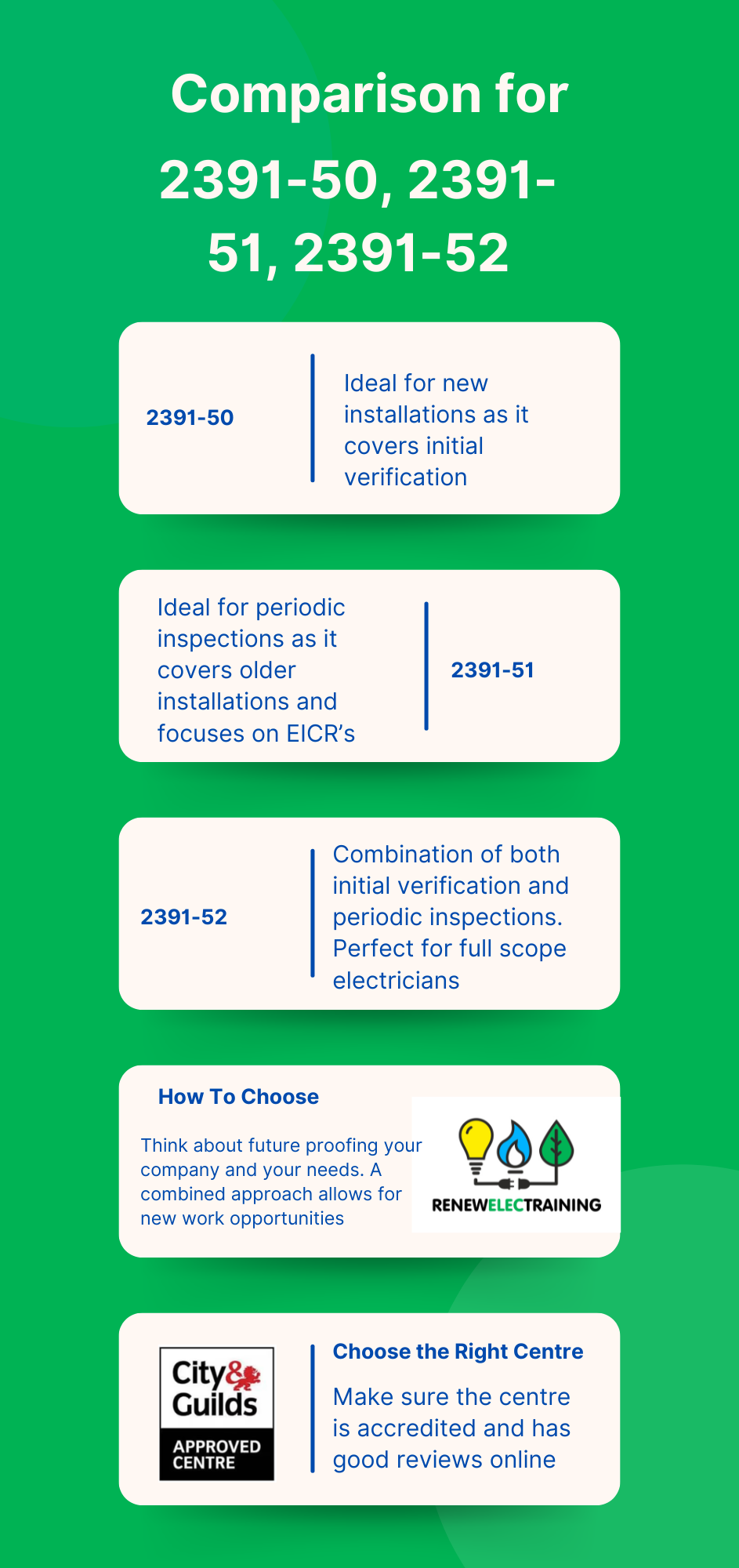
Key Differences at a Glance
Which 2391 Course Should You Choose?
Most learners now choose the 2391-52 combined course, because it gives you the full qualification in one go.
If you’re searching:
“best inspection and testing course UK”
“do I need 2391-50 and 2391-51”
The answer is usually:
👉 Go straight for 2391-52
It saves time, avoids duplication, and ensures you’re fully qualified to carry out both types of work.
A Quick Note on Experience
Before taking the 2391, you should:
Have your 18th Edition (BS 7671)
Be working in the industry or have practical experience
Inspection and testing isn’t just theory—it’s about applying knowledge safely in real situations.
Learn 2391-52 in a Supportive Environment
At Renew Elec Training, we specialise in helping electricians build confidence in inspection and testing—not just pass the exam.
Our 2391-52 course includes:
Practical, hands-on training
Experienced tutors who understand real-site challenges
We also create a supportive environment where you can ask questions, build confidence, and actually understand the “why”—not just memorise results.
Final Thoughts
Understanding the difference between 2391-50, 2391-51, and 2391-52 is key to choosing the right path in your electrical career.
2391-50 = new installations
2391-51 = existing installations
2391-52 = both (most popular option)
If you want to expand your skills, increase your earning potential, and move into testing and inspection, the 2391 is a powerful next step.