
Class 1 vs Class 2 Equipment (PAT Testing Explained Simply)
Understanding the difference between Class 1 and Class 2 equipment is one of the most important parts of any PAT testing course—and one of the most common areas where confusion can affect exam results.
In this guide, we’ll break it down clearly, using both practical explanations and the correct terminology you’ll need for your PAT testing exam.
Quick Answer: What Is the Difference Between Class 1 and Class 2 Equipment?
Class 1 equipment relies on an earth connection for safety
Class 2 equipment is double insulated and does not require an earth
That’s the key difference—but it becomes clearer when you look at how each type is constructed and tested.
What Is Class 1 Equipment?
Class 1 equipment has basic insulation and relies on a protective earth conductor to prevent electric shock.
If a fault occurs and live parts touch the metal casing, the earth path allows fault current to flow safely to earth—causing the fuse or breaker to operate.
Common Examples of Class 1 Equipment
Kettles
Toasters
Washing machines
Metal-cased appliances
How to Identify Class 1 Equipment
Has a metal outer casing
Uses a 3-core cable (live, neutral, earth)
Has an earth connection (usually visible in the plug)
What Tests Are Required for Class 1 Equipment?
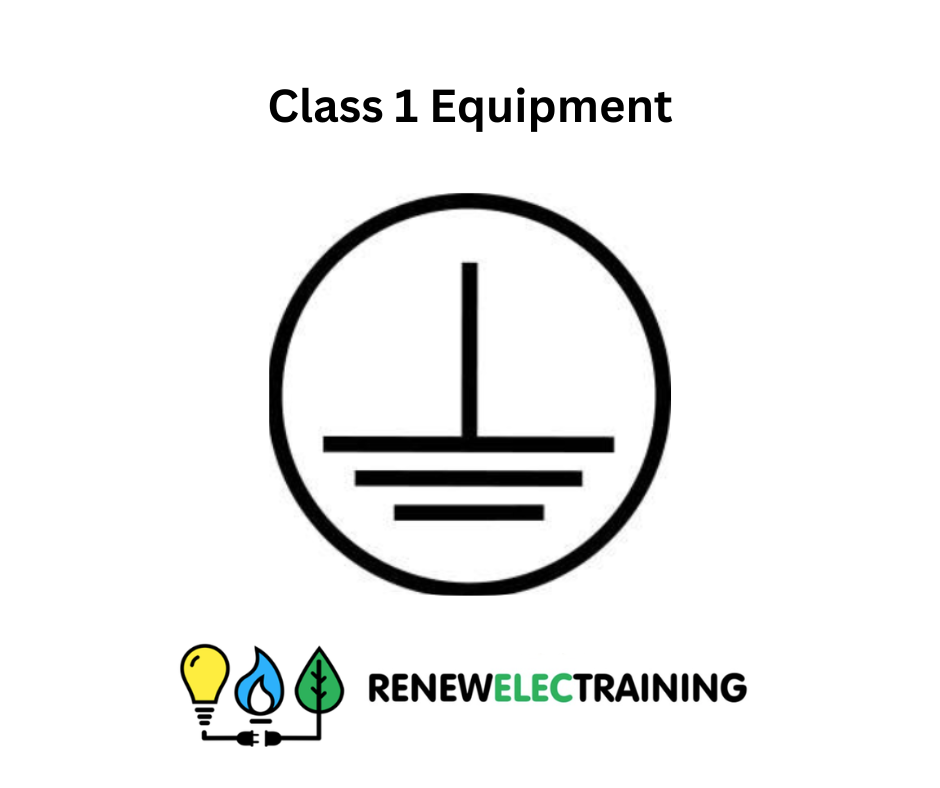
Class 1 equipment often has this symbol to represent earth.
Class 1 appliances require:
Earth continuity test (critical)
Insulation resistance test
Visual inspection
Why Earth Continuity Testing Matters
This test ensures that exposed conductive parts are properly connected to earth, so they remain safe if a fault occurs.
What Is Class 2 Equipment?
Class 2 equipment is designed with double insulation or reinforced insulation, meaning it does not rely on an earth for safety.
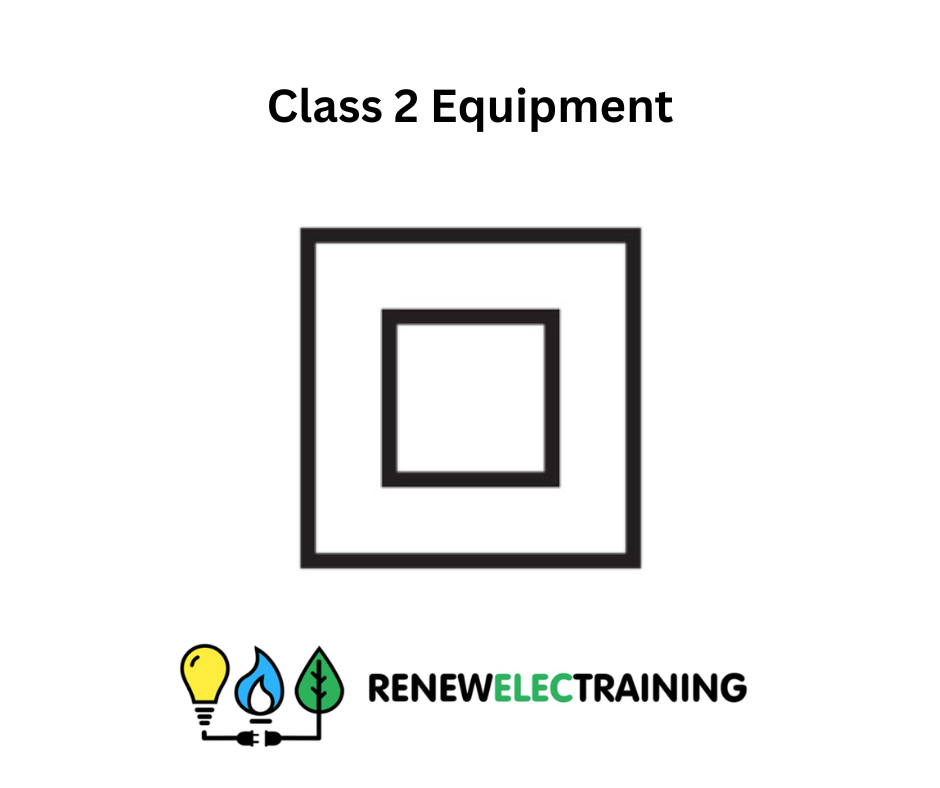
Class 2 equipment has this square within a square symbol to represent the double or reinforced insulation
Instead, it has two layers of protection preventing live parts from being exposed.
Common Examples of Class 2 Equipment
Phone chargers
Hairdryers
TVs
Plastic-bodied tools
How to Identify Class 2 Equipment
Often has a plastic casing
Uses a 2-core cable (no earth)
Displays the double insulation symbol (a square within a square)
What Tests Are Required for Class 2 Equipment?
Class 2 appliances require:
Insulation resistance test
Visual inspection
Earth continuity testing is NOT required because there is no earth connection.
Key Differences: Class 1 vs Class 2
Here Sam gives a run down of how we tell the difference between Class 1 and Class 2 equipment practically.
Why This Matters for PAT Testing Exams
Many learners understand the difference in practice—but struggle when questions are phrased in technical terms.
For example:
“Exposed conductive parts must be connected to earth” → Class 1
“Relies on double insulation for protection” → Class 2
“Learners usually know which test to carry out, but the challenge is recognising how the exam phrases the question,”
— Alex Tranter, Renew Elec Training
Common Exam Mistakes
1. Selecting an Earth Test for Class 2 Equipment
This is one of the most frequent errors.
2. Misidentifying Equipment Type
Especially when devices have mixed materials (e.g. plastic outside but internal metal parts).
3. Ignoring Key Words in Questions
Words like:
“Double insulated”
“Protective conductor”
“Exposed metal”
These are clues to the correct answer.
Quick Answer Section
Do Class 2 appliances need an earth test?
No. Class 2 appliances are double insulated and do not require earth continuity testing.
How do I identify Class 1 equipment?
Class 1 equipment typically has a metal casing and a 3-core cable with an earth connection.
What is the symbol for Class 2 equipment?
A square inside another square indicates double insulation (Class 2).
Practical Tip for Learners
If you’re unsure in an exam, ask yourself:
“Does this appliance rely on earth for safety—or is it designed without it?”
That one question will usually lead you to the correct answer.
Learn More and Practise
To build confidence, explore:
[PAT Testing Course Overview]
[What Tests Are Required for PAT Testing]
[PAT Testing Mock Exam Questions]
These resources will help you reinforce both practical knowledge and exam technique.
Final Thoughts
Understanding Class 1 vs Class 2 equipment is fundamental to safe PAT testing—and passing your exam.
Most learners already understand the practical side. The next step is recognising how that knowledge appears in exam questions.
Pair this guide with a short video demonstration, and you’ll cover both:
Visual learning (how to identify equipment)
Exam preparation (how to answer correctly)