
Can Anyone Carry Out PAT Testing?
Portable Appliance Testing (PAT) is one of the most widely discussed – and sometimes misunderstood – areas of electrical safety. A common question we hear is: can anyone actually do PAT testing? The short answer is yes — but with important context.
This article builds on our previous discussion, Is PAT Testing Hard?, and explores what it really takes to carry out PAT testing confidently, competently, and safely.
Who Is Allowed to Do PAT Testing?
Contrary to popular belief, PAT testing in the UK is not restricted to qualified electricians. There is no single licence required. Instead, the key requirement is that the person conducting the testing must be competent.
“Competent” in this context means:
Having sufficient knowledge of electrical safety
Understanding the testing process and equipment
Being able to recognise faults and hazards
Knowing when something falls outside your skill level
In many organisations, PAT testing is carried out by:
Maintenance staff
Facilities teams
Health & safety personnel
External contractors
So yes, technically anyone can do PAT testing — but only if they’ve been properly trained and understand what they’re doing.
Why Training Still Matters
While the barrier to entry may seem low, PAT testing is not something you should approach casually. The consequences of poor testing can include:
Missed faults
False “pass” results
Electrical hazards left in service
Reduced compliance with workplace regulations
This is why structured training is so valuable. Courses such as the City & Guilds 2377-77 qualification are specifically designed to give individuals the skills and confidence needed to carry out in-service inspection and testing properly.
If you’re considering formal training, you can learn more about our PAT testing courses in Redditch (near Birmingham) here
Take the Next Step
If you’re looking to move beyond basic understanding and become truly competent, exploring a structured course is the best step forward.
Our PAT testing training is designed for beginners and experienced professionals alike, combining practical, hands-on learning with clear guidance on real-world scenarios.
You can find full details and upcoming course availability here:
PAT Testing Course (City & Guilds 2377-77)
Is PAT Testing Respected in the Industry?
This is where the conversation becomes more nuanced.
Within the electrical industry, PAT testing doesn’t always carry the same prestige as installation or inspection work. Some electricians see it as relatively straightforward or repetitive, particularly compared to more complex electrical tasks.
However, this perception overlooks a key point: PAT testing plays a critical role in day-to-day safety.
In reality:
PAT testing is often the first line of defence against electrical faults
It applies to equipment used daily by staff, not just fixed installations
Failures can directly impact workplace safety and liability
And importantly, the industry at large clearly recognises its value. Large organisations regularly invest in training their maintenance teams on the City & Guilds 2377-77 course, ensuring that internal staff can carry out testing safely and consistently.
That level of investment reflects just how seriously PAT testing is taken where it matters most — in real working environments.
Practical Experience Matters
One of the things that helps bridge the gap between theory and respect is hands-on experience.
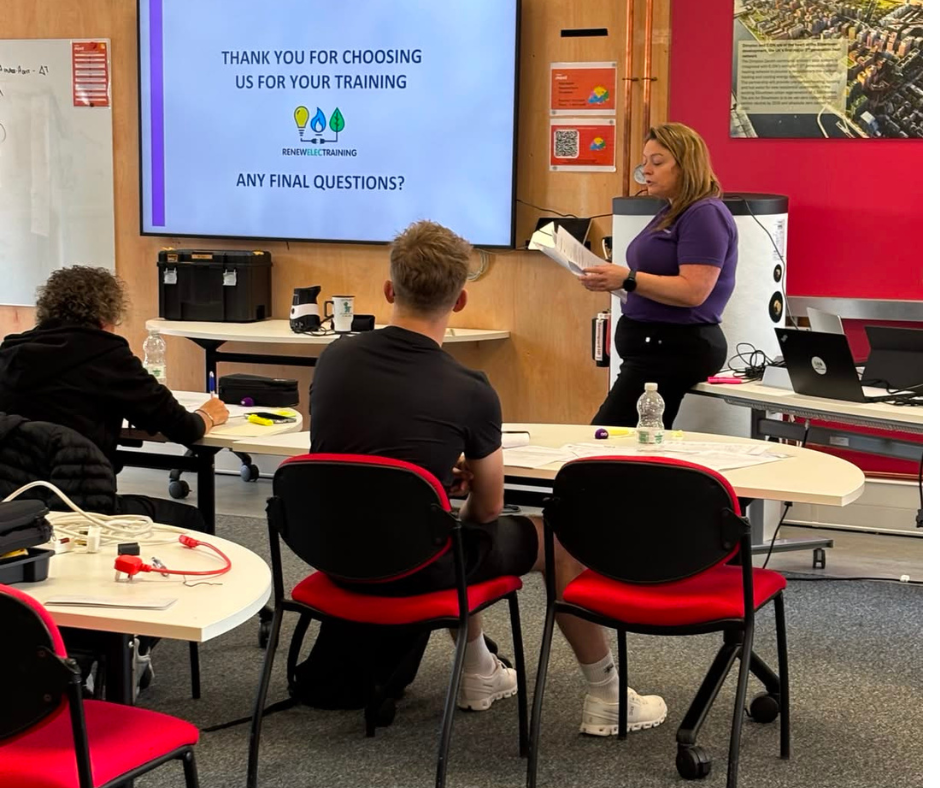
For example, Sam – one of our instructors – regularly delivers PAT testing training in corporate environments, working directly with maintenance teams and facilities staff. This real-world approach helps demonstrate:
How PAT testing fits into broader safety systems
The decision-making involved beyond simply “pass” or “fail”
The importance of consistency and record keeping
Seeing PAT testing applied in a live environment often changes perceptions, particularly for those who initially underestimated its importance.
Linking Back: Is PAT Testing Hard?
If you’ve read our article Is PAT Testing Hard?, you’ll already know that while PAT testing isn’t overly complex, it does require:
Attention to detail
A methodical approach
An understanding of different appliance classes and risks
In that sense, it sits in a unique position — accessible to newcomers, yet still requiring proper training to do well.
Final Thoughts
So, can anyone do PAT testing?
Yes — but not without becoming competent first.
With the right training, guidance, and experience, PAT testing is an accessible and valuable skill that supports workplace safety across countless industries.
And while it may sometimes be underestimated, its importance is reflected in the number of organisations investing in formal training and ongoing competence.
If you're ready to develop that skill properly, exploring a recognised course is the next logical step.